

AI-Driven Mobility at Global Scale
Reliable Connectivity for a Moving World
From connected vehicles and fleet operations to autonomous systems and mobility platforms, the future of transportation depends on secure, resilient, and always-on connectivity. Monogoto delivers software-defined connectivity that unifies cellular, private networks, and satellite, enabling real-time data, global coverage, and seamless operations across every mobility environment.
Built for Movement at Every Scale
Always-On Connectivity Across Every Journey
Mobility systems operate across cities, highways, and remote regions where network conditions constantly change. Monogoto provides uninterrupted connectivity for navigation, telematics, and real-time operations.
Secure, Zero-Trust Connectivity for Vehicles & Fleets
Connected mobility introduces new security challenges across vehicles, infrastructure, and data. Monogoto embeds zero-trust security at the network layer, providing secure communication across vehicles, fleets, and mobility platforms with reduced risk.
Real-Time Data for Smarter Mobility
Mobility systems rely on continuous data for routing, diagnostics, and automation. Monogoto ensures reliable data flow between vehicles, edge systems, and the cloud to improve efficiency, enable predictive maintenance, and optimize fleet operations.
Connected Vehicles & Telematics
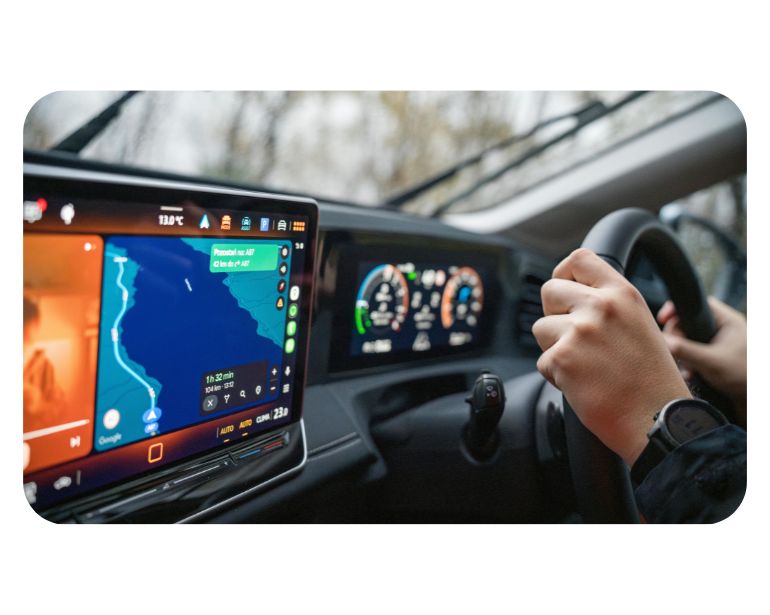
Monogoto enables reliable connectivity for connected vehicles, supporting telematics, diagnostics, infotainment, and real-time data exchange. With seamless multi-network coverage, vehicles remain connected across regions and conditions, enabling OEMs and mobility providers to deliver consistent, high-quality experiences at scale.
Fleet Management & Logistics
From logistics fleets to last-mile delivery, Monogoto powers real-time tracking, route optimization, and operational visibility. By ensuring continuous connectivity across geographies, fleet operators can improve efficiency, reduce costs, and maintain full visibility into their operations.
Autonomous Mobility Systems
Autonomous vehicles and systems rely on connectivity for telemetry, coordination, and cloud integration. While AI inference happens on-device, Monogoto provides the resilient connectivity needed for data exchange, fleet coordination, and system optimization.
Smart Transportation Infrastructure
Monogoto supports connectivity for smart traffic systems, infrastructure sensors, and urban mobility platforms. By enabling real-time data exchange between systems, cities can improve traffic flow, enhance safety, and optimize transportation networks.
Micromobility & Shared Mobility Platforms
From scooters and bikes to shared vehicle platforms, Monogoto enables seamless connectivity for tracking, billing, and operational management. With global coverage and reliable connectivity, mobility providers can scale services across cities and regions without infrastructure limitations.
Frequently Asked Questions
Connected mobility uses IoT technologies, cellular connectivity, and real-time data to connect vehicles, transportation infrastructure, and mobility services. This includes shared e-scooters, e-bikes, electric vehicles (EVs), public transportation systems, and autonomous vehicles.
Connected mobility helps operators improve fleet visibility, optimize operations, enhance user experiences, and support smarter transportation networks.
IoT enables mobility providers to collect and analyze real-time data from vehicles and infrastructure. Connected devices can support vehicle tracking, remote diagnostics, geofencing, battery monitoring, predictive maintenance, and software updates.
This visibility allows operators to improve vehicle availability, reduce downtime, and operate transportation services more efficiently.
Micromobility refers to lightweight, shared transportation options such as e-scooters, e-bikes, and other small electric vehicles that are used for short-distance travel. These vehicles rely on connectivity to support rider access, location tracking, fleet management, theft prevention, and operational analytics.
Geofencing uses location data to create virtual boundaries around specific geographic areas. Mobility operators use geofencing to control where vehicles can be ridden, parked, or operated.
Cities often require geofencing to enforce parking zones, restricted areas, speed limits, and safety regulations for shared mobility services.
Connected EV charging stations use IoT connectivity to monitor charger status, track energy usage, process payments, support remote diagnostics, and enable predictive maintenance. Connectivity also allows operators to manage charging networks remotely and improve uptime across distributed charging infrastructure.
Autonomous vehicles rely on connectivity to exchange data with cloud platforms, fleet management systems, mapping services, and supporting infrastructure. Connectivity enables remote monitoring, software updates, diagnostics, telemetry collection, and operational oversight. And as autonomous transportation evolves, reliable and secure connectivity becomes increasingly important for safety and performance.