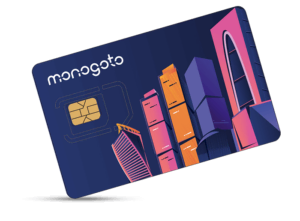
Global IoT SIM: One Identity Across Every Network
Physical SIM, eSIM, iSIM, or SoftSIM built for any device, network, or deployment.
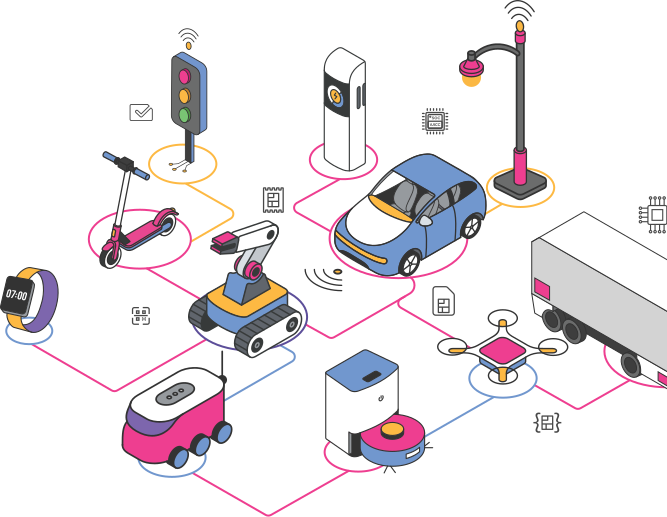
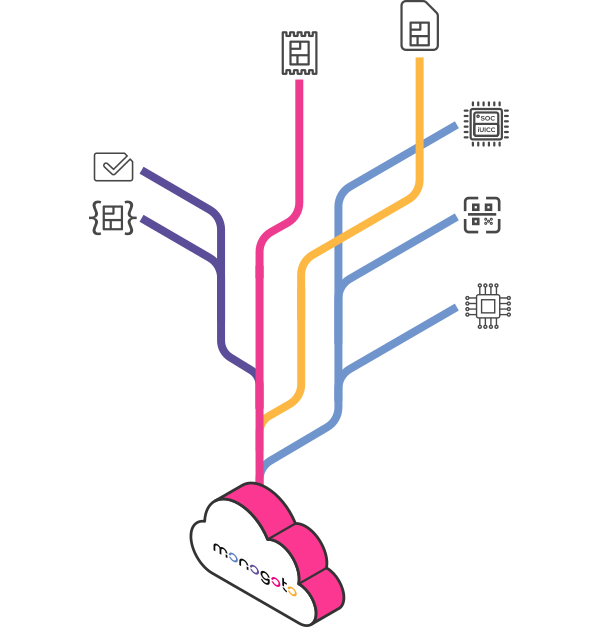
From removable SIMs to fully integrated iSIM and SoftSIM, Monogoto supports every form factor with the same credentials, security, and global network access. No matter how your device is built, it connects to every last mile through a single platform with Zero Trust authentication at its core.
Traditional SIM — 2FF, 3FF, 4FF
Embedded SIM (MFF2) & eSIM (eUICC)
iSIM, SoftSIM & nuSIM
SGP.32 Remote SIM Provisioning
Multi-IMSI & MTK Toolkit
Hardware Security Module (HSM) Built In
You Choose the Hardware. We Connect It.
Device manufacturers make hardware decisions based on size, cost, power, environment, and supply chain. Some designs need a traditional SIM slot. Others need a soldered chip. Others need no physical SIM at all. Monogoto doesn’t force a form factor on you, we support all of them. Whatever SIM technology your device uses, it connects to the full Monogoto network: public cellular, private LPWAN, private 5G, Wi-Fi, and satellite. Same credentials, same Zero Trust authentication, same platform, same APIs, same billing. The form factor is your choice. The network is the same.
Physical SIM: Traditional Form Factors
Monogoto SIM cards are available in all standard physical form factors: 2FF (Mini), 3FF (Micro), and 4FF (Nano). Plug-and-play with any device that has a SIM slot. Industrial-grade options available for harsh environments; extended temperature range, vibration resistance, and long lifecycle. Ideal for existing device fleets, quick prototyping, and deployments where physical SIM access is straightforward.
Embedded SIM (MFF2): For devices where a removable SIM isn’t practical, soldered directly onto the PCB during manufacturing. Smaller footprint, higher durability, no SIM slot required. Same Monogoto credentials, same network access, same platform management.
eSIM (eUICC): Remote Profile Management
eSIM technology adds the ability to remotely download, switch, and manage SIM profiles over the air. The physical form factor can be any size, what makes it an eSIM is the eUICC application running on the card, which supports multiple operator profiles and remote provisioning. Monogoto supports consumer eSIM activation via QR code (SGP.22) and the new IoT-optimized SGP.32 standard for remote provisioning of deployed devices.
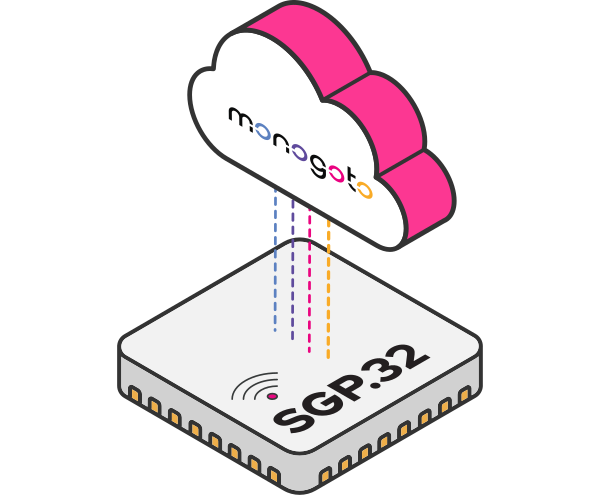
SGP.32: The latest GSMA standard for IoT remote SIM provisioning, designed for resource-constrained devices with minimal bandwidth, memory, and power. Three key components: the IoT Profile Assistant (IPA) on the device, the eSIM IoT Remote Manager (eIM) in the cloud, and the SM-DP+ for secure profile delivery. Monogoto’s SGP.32 implementation enables you to provision, switch, and manage SIM profiles across your entire fleet remotely; no physical access, no truck rolls.
iSIM, SoftSIM & nuSIM: The SIM Disappears into Silicon
The next generation of SIM technology eliminates the physical card entirely. The SIM becomes software running inside the device’s secure processor.
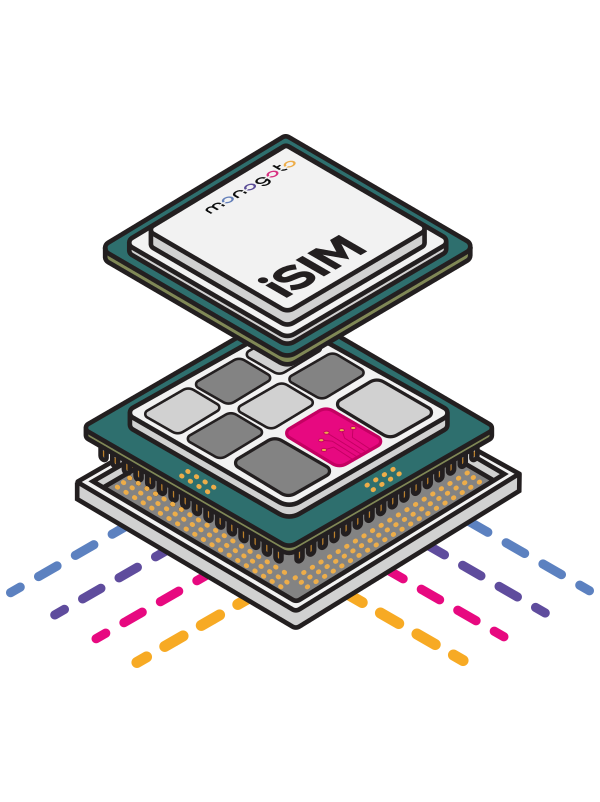
iSIM: Integrated SIM, the SIM application runs inside the device’s System-on-Chip (SoC), in a dedicated secure enclave. No external SIM hardware at all. Smallest possible footprint, lowest power consumption, highest integration. Ideal for ultra-compact IoT devices, wearables, and sensors.
SoftSIM: A virtual SIM solution where SIM credentials (IMSI, authentication keys) are securely stored in the device’s non-volatile memory and emulated in software. No physical SIM card, no SIM slot, no UICC chip. SoftSIM reduces bill of materials, eliminates SIM-related supply chain complexity, and enables provisioning during manufacturing or via secure firmware update. Monogoto supports SoftSIM on certified modules including SIMCom A7672 and Nordic nRF91 series.
nuSIM: An open-standard iSIM approach developed with Nordic Semiconductor and Redtea Mobile. SIM credentials are managed within the secure Arm TrustZone® of the nRF91 application processor. Fully digital provisioning during manufacturing—no physical SIM insertion step. Security-certified by TÜV Nord. Ideal for Nordic-based designs targeting CAT-M and NB-IoT deployments.
Multi-IMSI & the Monogoto Toolkit (MTK)
A single Monogoto SIM can hold multiple IMSI profiles, multiple carrier identities, and switch between them based on rules you define. The Monogoto SIM Toolkit (MTK) is a SIM-resident application that manages this switching automatically: by network availability, signal quality, cost optimization, geographic location, or any policy you configure through the platform or API.
Multi-IMSI is what enables true network resiliency. If a carrier network goes down, the MTK switches to an alternative carrier, without device reboot, without application interruption. Combined with the Monogoto platform’s OTA management, you can add, remove, or reconfigure IMSI profiles across your entire fleet remotely. This is the mechanism that ties public carriers, private networks, and satellite access together into one seamless experience.
Security: The HSM at the Core
Every Monogoto SIM, regardless of form factor, contains a Hardware Security Module (HSM). The HSM stores cryptographic keys in tamper-resistant hardware, performs authentication calculations on-chip, and never exposes the secret key material outside the secure element. This is the foundation of Monogoto’s Zero Trust architecture: the device’s identity is proven by something it physically possesses (the HSM), not by something that can be intercepted, copied, or spoofed.
The HSM also enables SIM-based Wi-Fi authentication (EAP-SIM/AKA), cellular authentication across every carrier and every access type, and the cryptographic operations required for SGP.32 remote provisioning. It’s the single trust anchor that makes one SIM, one identity, every network possible.
Get a Monogoto Secure IoT SIM Card now.
Get a Monogoto Secure IoT SIM Card now(Contact us)
Frequently Asked Questions
SIM technology has evolved beyond traditional removable SIM cards to support more flexible and scalable IoT deployments.
- What is eSIM? eSIM (embedded SIM) is a programmable SIM embedded directly into a device, allowing operators and enterprises to remotely download and manage carrier profiles.
- What is iSIM? iSIM (integrated SIM) embeds SIM functionality directly into the device’s processor or chipset, reducing hardware requirements, lowering power consumption, and improving security.
- What is SoftSIM? SoftSIM is a software-based approach to device authentication and connectivity that removes the need for dedicated SIM hardware. By virtualizing SIM functionality, SoftSIM can simplify device design and enable new deployment models for connected devices.
Each technology supports remote provisioning and simplified connectivity management, but they differ in how SIM functionality is implemented within the device. For IoT deployments, the choice often depends on device size, power requirements, manufacturing considerations, and lifecycle management needs.
Monogoto supports the full range of SIM form factors and technologies: removable SIMs in 2FF (mini), 3FF (micro), and 4FF (nano) formats, solderable embedded SIMs (MFF2 eSIM), iSIM integrated into the device chipset, and SoftSIM for hardware-free deployments. This flexibility lets device manufacturers choose the option that best fits their hardware design, deployment requirements, and supply chain strategy while keeping a consistent connectivity experience across device fleets.
Yes. Monogoto supports remote SIM provisioning, enabling organizations to download, activate, and manage carrier profiles over the air without physically accessing the device.
Using modern GSMA standards, including SGP.32 for IoT, organizations can update connectivity profiles throughout the device lifecycle, helping simplify global deployments, reduce operational costs, and meet regional connectivity requirements.
Remote profile management is particularly valuable for fleet management, asset tracking, smart cities, industrial IoT, healthcare, and connected mobility applications where devices may be deployed across multiple countries and networks.
Monogoto provides access to 550+ networks across 200+ countries. This global reach allows organizations to deploy connected devices internationally while managing connectivity through a single platform and SIM solution.
Yes. SIM technology serves as a device’s hardware-based root of trust, providing secure authentication between the device and mobile network. Monogoto uses industry-standard authentication mechanisms to help ensure that only authorized devices can access network resources.
This hardware-based security model helps protect connected devices against unauthorized access while supporting secure communications across IoT deployments. Monogoto is also advancing identity-based security through its partnership with SLC Digital, bringing deterministic identity and secure connectivity under one platform.
Monogoto SIMs support multi-IMSI and eUICC profile management, allowing a single SIM to authenticate across 550+ networks in 200+ countries. Devices automatically use the best available network in each region, and connectivity profiles can be updated over the air as deployments grow or requirements change, without swapping SIM cards in the field.