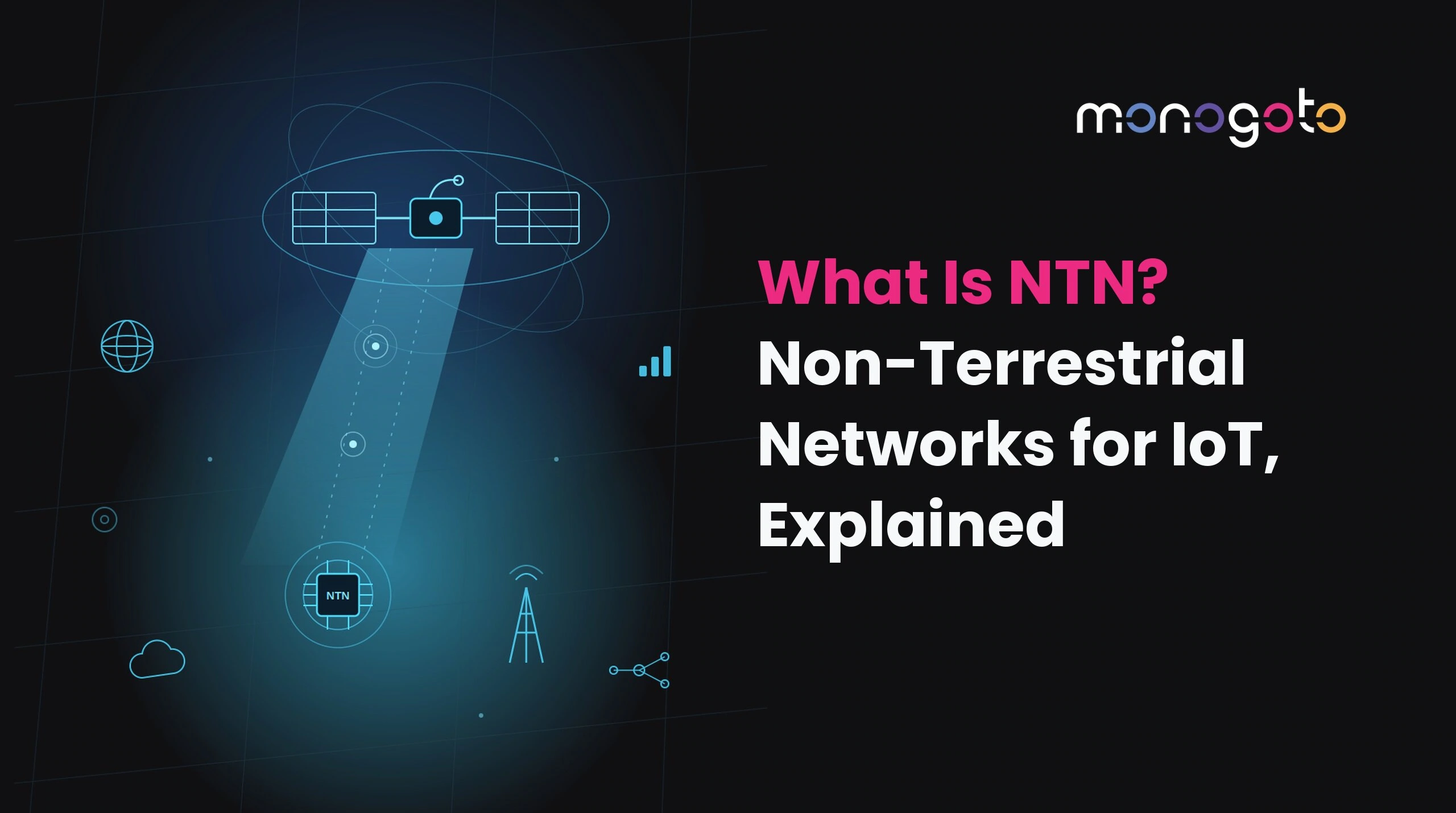

The conversation around satellite connectivity has never been louder. While the vision of universal coverage is capturing attention, the actual status of Non-Terrestrial Networks (NTN) is a mix of progress and ongoing development. Several major players have launched pilot deployments and early commercial services, providing two-way IoT messaging and basic data connectivity in select regions. At the same time, worldwide coverage and feature parity with terrestrial networks are still on the horizon. For teams building real products today, the more practical question is:
Is NTN actually ready for production?
In a recent IoT Stars webinar, Monogoto Co-Founder and CTO Maor Efrati joined industry experts from Qoitech and KYOCERA AVX to put that question to the test.
The discussion went beyond connectivity alone, exploring the realities of NTN performance, power consumption, antenna behavior, link budgets, and operational costs.
The takeaway?
Satellite IoT is no longer a futuristic concept, and understanding where it works, where it doesn’t, and what it costs matters. Compared to terrestrial IoT, satellite options typically involve higher device and data costs, but they provide critical coverage in remote or underserved areas that cellular networks cannot reach. For many industrial and environmental applications, the broader reach and resilience of satellite IoT could justify the extra investment, especially when continuous connectivity is mission-critical.