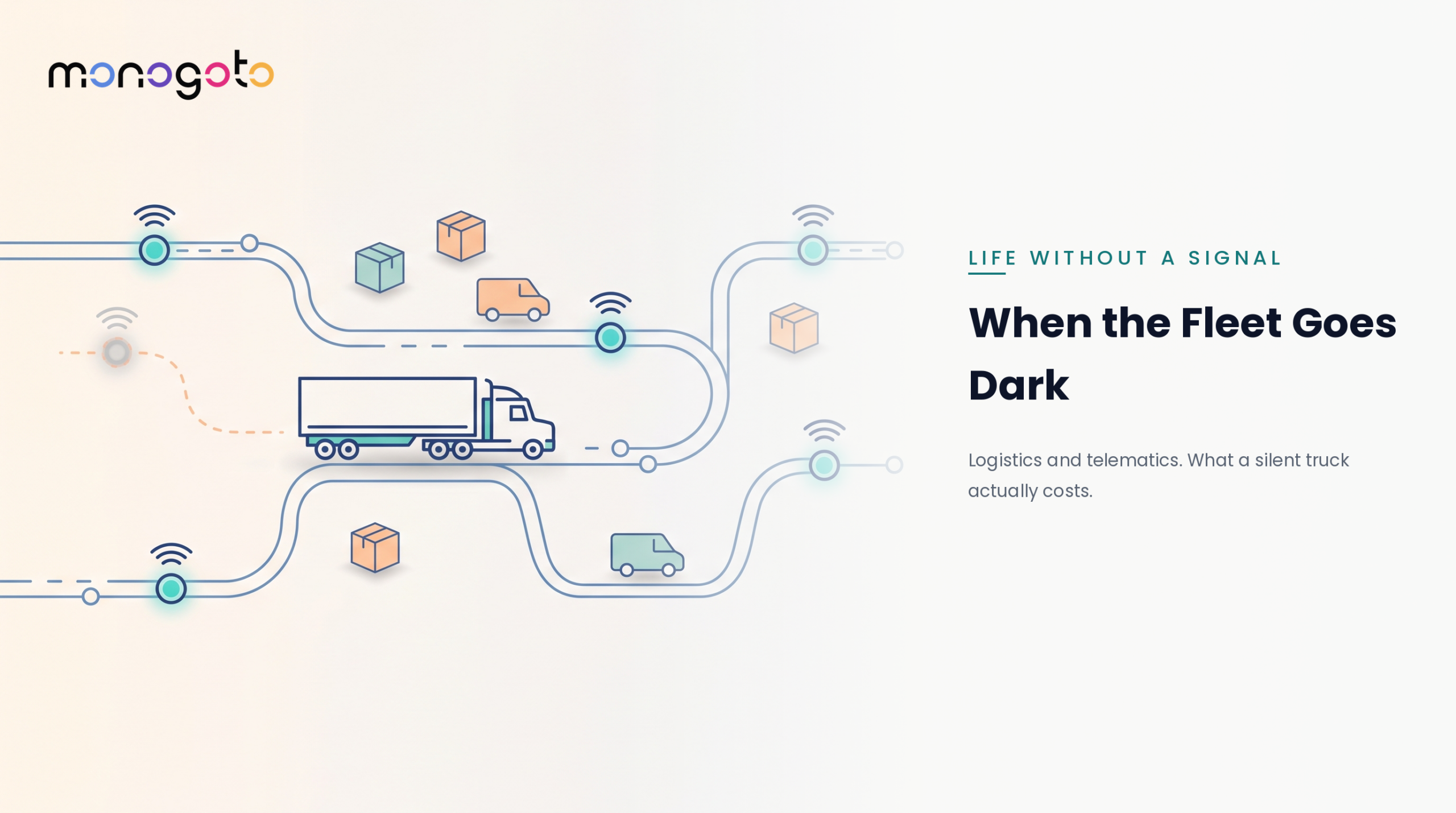


Why unreliable IoT connectivity creates operational, compliance, and security risks fleets can’t afford to ignore.
Transportation has become a real-time industry. Fleet operators rely on a constant stream of data to manage vehicles, optimize routes, monitor cargo, and keep day-to-day operations moving seamlessly.
Telematics systems track vehicle health and location in real-time. Electronic Logging Devices (ELDs) continuously log driver activity. Cold chain sensors monitor temperature-sensitive cargo. AI-powered systems adjust routing dynamically as conditions evolve.
None of this works without reliable connectivity.
Connectivity is often treated as a telecom decision. In reality, it has become operational infrastructure. Because when connectivity fails, fleets don’t just lose signal. They lose visibility, compliance, coverage, security monitoring, and trust. These losses translate directly into business impact: operational downtime disrupts delivery schedules and increases costs, compliance gaps can lead to regulatory fines, missed shipments damage customer relationships, and security lapses put assets and reputation at risk. The consequences ripple quickly across the organization, impacting revenue, margins, and long-term competitiveness.
The real cost of connectivity failure isn’t the outage itself; it’s everything that breaks while the fleet is disconnected.
Transportation Runs on Real-Time Data Now
Today’s fleets rely on connected systems to manage vehicle health, monitor driver behavior, track assets, maintain regulatory compliance, protect cargo, and deliver real-time visibility to customers. Data flows continuously between vehicles, sensors, applications, and operations teams, enabling faster decisions and more efficient operations.
This shift has created enormous operational advantages. But it has also created a new dependency: continuous connectivity.
Connectivity Failures Create Blind Spots
A connected fleet operates on the assumption that data is flowing. Every routing decision, maintenance alert, ETA calculation, and customer update depends on that assumption being true. When connectivity drops, that assumption breaks.
Vehicles disappear from dashboards, asset locations become uncertain, dispatch teams lose real-time visibility, maintenance alerts go unnoticed, and operations teams are forced to make decisions based on incomplete or outdated information.
In large-scale transportation operations, these blind spots add up quickly. Routes get optimized based on stale data. Issues that could have been addressed proactively become problems discovered hours later. Small disruptions spread across dispatch, customer service, and logistics workflows.
Compliance Risks Start the Moment Data Stops Flowing
ELDs, telematics systems, and digital fleet management platforms all rely on continuous data transmission to maintain accurate records and support regulatory requirements. What starts as a network issue can quickly become an operational or regulatory issue with missing logs, incomplete audit trails, and failed roadside data transfers, creating risk for both drivers and fleet operators.
The challenge becomes even greater for fleets operating across multiple regions, countries, or rural areas where coverage reliability varies. For example, single-carrier connectivity models often struggle in these environments because devices are tied to one network regardless of conditions. If that carrier experiences performance issues, devices lose connectivity with no built-in alternative. This is where multi-network or carrier-agnostic solutions can make a difference, allowing devices to automatically switch to the strongest available network and maintain seamless operation even when one provider experiences issues.
Cargo Monitoring Failure Becomes Product Loss
Few transportation use cases make the consequences of connectivity failure more obvious than cold chain logistics. Food, pharmaceuticals, medical supplies, and other temperature-sensitive goods rely on continuous environmental monitoring throughout transit. Sensors must transmit reliably to ensure temperatures remain within an acceptable range.
When a monitoring device loses connectivity, it doesn’t just stop reporting. It stops enabling the automated responses designed to protect the cargo. As a result, alerts fail to trigger, back-up workflows stall, compliance records become incomplete, and operations teams lose the ability to respond before product integrity is compromised.
For highly regulated industries such as food and pharmaceuticals, even a short coverage gap can create significant consequences, including rejected shipments, compliance investigations, insurance claims, or product disposal.
Modern Cargo Security Depends on Connectivity
Connected tracking systems now play a critical role in identifying route deviations, unauthorized movement, geofence violations, unexpected stops, and other indicators of potential theft. However, these protections only work when the data is flowing.
When telematics devices lose connectivity, fleets lose the visibility needed to detect and respond to security incidents in real time. A disconnected vehicle or trailer becomes significantly harder to monitor, investigate, and recover.
For high-value shipments, even short periods of lost visibility can increase exposure.
As transportation becomes more connected, physical security and connectivity resilience are becoming inseparable.
Customer Trust Drops When Visibility is Spotty
Retailers, logistics providers, and enterprise customers increasingly build their own operations around the assumption that tracking data will be accurate and continuously available.
When visibility becomes inconsistent, confidence declines. In an era where customers expect to know exactly where a shipment is and when it will arrive, even temporary visibility gaps can create outsized concerns.
Customer service teams spend more time responding to inquiries. Shipment status becomes harder to verify. Service-level agreements become more difficult to meet. Operational disruptions that may have been manageable become customer experience issues.
Customers can tolerate delays.
What they struggle to tolerate is uncertainty. The fleets building the strongest customer relationships today are often the ones delivering the most reliable visibility.
What Transportation Companies Should Look for in an IoT Connectivity Provider
Executive Checklist: Evaluating Your IoT Connectivity Provider
To ensure your fleet’s connectivity solutions align with both operational and business objectives, use this checklist as you assess providers:
- Multi-network resilience: Does the provider offer seamless access to multiple carrier networks, allowing devices to automatically connect to the strongest available network based on signal quality, availability, and geography? Is there automatic network fallback if one carrier experiences degradation?
- Real-time visibility and diagnostics: Can your team monitor connectivity health, device status, and network performance in real time? Are proactive alerts available to resolve issues before they become operational problems?
- OTA management at scale: Does the solution support remote, software-based updating of carrier profiles and connectivity policies? Can you make changes across your fleet without physical SIM replacements or manual intervention?
- Security at the network layer: Does the provider’s infrastructure include security features that help protect against unauthorized access, device compromise, and cyberattacks targeting transportation assets?
- API-driven control: Are APIs available so you can automate workflows, integrate with fleet management systems, and manage connectivity as part of your operational infrastructure?
Using these criteria as a decision framework will help ensure that your provider aligns with your fleet’s resilience, security, and growth requirements.
Connectivity is Transportation Infrastructure
The transportation industry has invested heavily in the intelligence layer: smarter vehicles, connected sensors, real-time visibility platforms, and increasingly, AI-driven operations.
What often receives less attention is the infrastructure underneath it all. When connectivity is reliable, these systems work seamlessly. When it isn’t, visibility gaps emerge, compliance risks increase, cargo monitoring breaks down, and customer trust begins to break.
As transportation becomes more data-driven, connectivity becomes more than a networking decision. It becomes an operational one.
The fleets best positioned for the future aren’t simply investing in more connected technologies; they’re investing in the resilience of the infrastructure those technologies depend on. Because in modern transportation, reliable connectivity isn’t a feature. It’s a foundation.
If connectivity has become critical infrastructure for your fleet, it deserves infrastructure-grade resilience.
Explore Monogoto’s free IoT connectivity starter kit and see what reliable, multi-network connectivity looks like in practice.